
The origins of the snake you often see on the walls of ancient Egyptian writing and symbols goes back to the beginning of mankind. For a long time, people often used the symbol of the snake to be symbolic and align with a healer.
When you see the symbol of a snake in ancient writing, it’s often used as symbolism to being a healer. This comes back from ancient mythology when Asclepius, the God of Health had a snake intertwined with his very own staff.
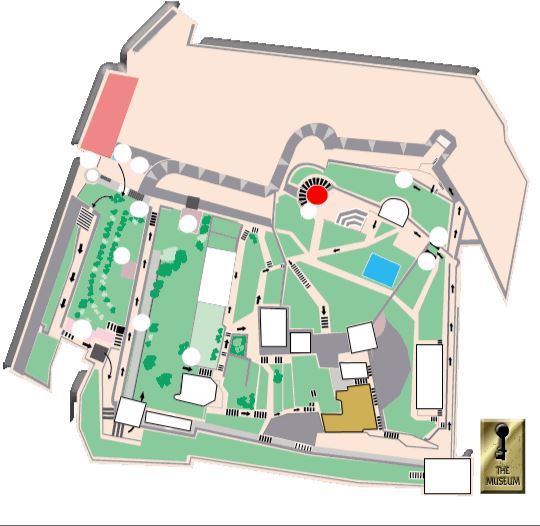
This is why you see the snake symbol imprinted on the tower of Bodrum castle. It’s meant to give you the sense that it was once a healing center where people came to get well, whether it was after battle or they were feeling unwell. The place known as Snake Tower today, was once thought to be an infirmary owned by the St. John hospital which was run by the Garrison of the Knights that owned the Hospital of St. John.
Today, the secret museum isn’t a wellness center but serves as a reminder and visual dialogue to artifacts that focus on the core components of life: the birth of someone,
life and then death. Back during the First Crusade, a lot of people didn’t believe in medicine or even personal hygiene. A lot of people would succumb to this ignorance as they died from horrific diseases or wounds that they got in battle because they didn’t believe in any kind of modern medicine during the time.
Blessed Gerard was the recognized founder of the Hospital of St. John. During this time, Gerard was practicing healing and learning the art of healing through Muslim medicine practitioners. Gerard and his following was known as the Knights of St. John and they would later become known as a military religious order. Their primary duties were treating sick and wounded soldiers as a result of battle. They also went on to establish hospitals in as many places as they could.
One of these hospitals was actually located directly in the Snake Tower in the Bodrum Castle. There was an important infirmary in there that treated many sick and wounded. While medicine and healing wasn’t practiced commonly, the Knights were blissfully unaware that medicine and healing had actually been practiced in this very location for years and years. Historians debate the exact origins of when healing and medicine was practiced at the Snake Tower.
The existence of this Snake Tower and the historical location provides evidence of a healing center for sick and wounded, in a time where medicine was frowned upon and people didn’t take proper care of themselves.
You can also find the God Priapus and his influence inside of the Snake Tower as well. It was well believed even back then that even through birth, life and death, you needed procreation to make those three events happen and for this reason, there’s a lot of artifacts that have the symbolism of virility.
If you visit the Caunus Altar, you can see Tellus Mater, who was the Goddess of nature and marriage. In this exhibit, you can witness Tellus Mater holding Eros in her arms and this was built to demonstrate the procreative belief that the people back then held. The symbolism of the snake shouldn’t be viewed as just a symbol of medicine however because it was also viewed as a symbol of sexuality, sin, fruitfulness and even death.
Hippocrates was regarded as one of the fathers of medicine and it was at that very spot that he taught his disciples how to heal and treat people, on one of the nearby islands of Cos. So when viewing this exhibit, keep that in mind that the symbolism of the snake has a lot of different meanings and dates back to times we don’t fully understand.